
How to Find a Curly Hair Salon That Actually Knows Curls
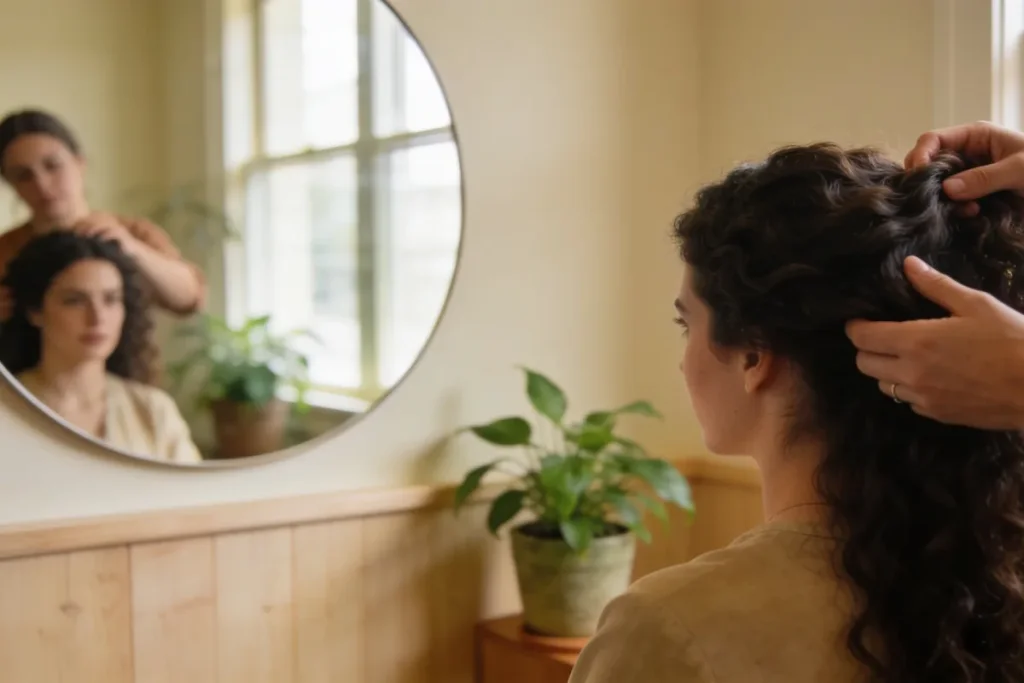
The haircut that made you reach for the straightener
The salon had good reviews and the chairs were full. You sat down, described your hair, and the hairdresser nodded and got to work with the confidence of someone who had done this a thousand times. An hour later you looked in the mirror and did not recognise the shape around your face. It was poofy in some places, flat in others, and cut on an angle that made sense for straight hair and no sense for yours. Then came the two weeks of ponytails while it grew into something you could live with.
Most people with curls have a version of this story. And under it sits a quiet belief that builds up over years of bad haircuts: that your hair is difficult, that it does what it likes, that a good result is luck. That belief is the real damage. The hair is not difficult. The method was wrong.
This article is about telling the difference before you sit in the chair. What a genuine curl specialist does that an ordinary salon does not, why the way a haircut is done matters more than the way it is priced, and how to build a shortlist you can trust. Prices mentioned here are indicative and vary by city and salon, so treat them as a shape rather than a list.
Why the usual salon gets curls wrong
Most hairdressers train and work mainly on straight or lightly waved hair, because that is what most of their chairs are filled with. Nothing about that makes them careless. It means their default method is built for hair that hangs down, and curls do not behave that way.
The mechanics are simple. A curl is shorter than it looks, because it is coiled. When hair is cut wet and pulled straight, the scissors take off more than intended, because the hairdresser is measuring a length the curl will never show. The cut lands in the wrong place once the hair dries and springs back up. Add a styling finish that involves a brush and a blow-dry, and hair that had a shape to it leaves the salon as a single puffy cloud.
Straightening is part of the same pattern. A salon that reaches for the straightener to fix the finish is not styling your hair, it is hiding the cut. If you would never straighten your hair at home, a finished look built on a straightener tells you nothing about how the cut will behave tomorrow morning.
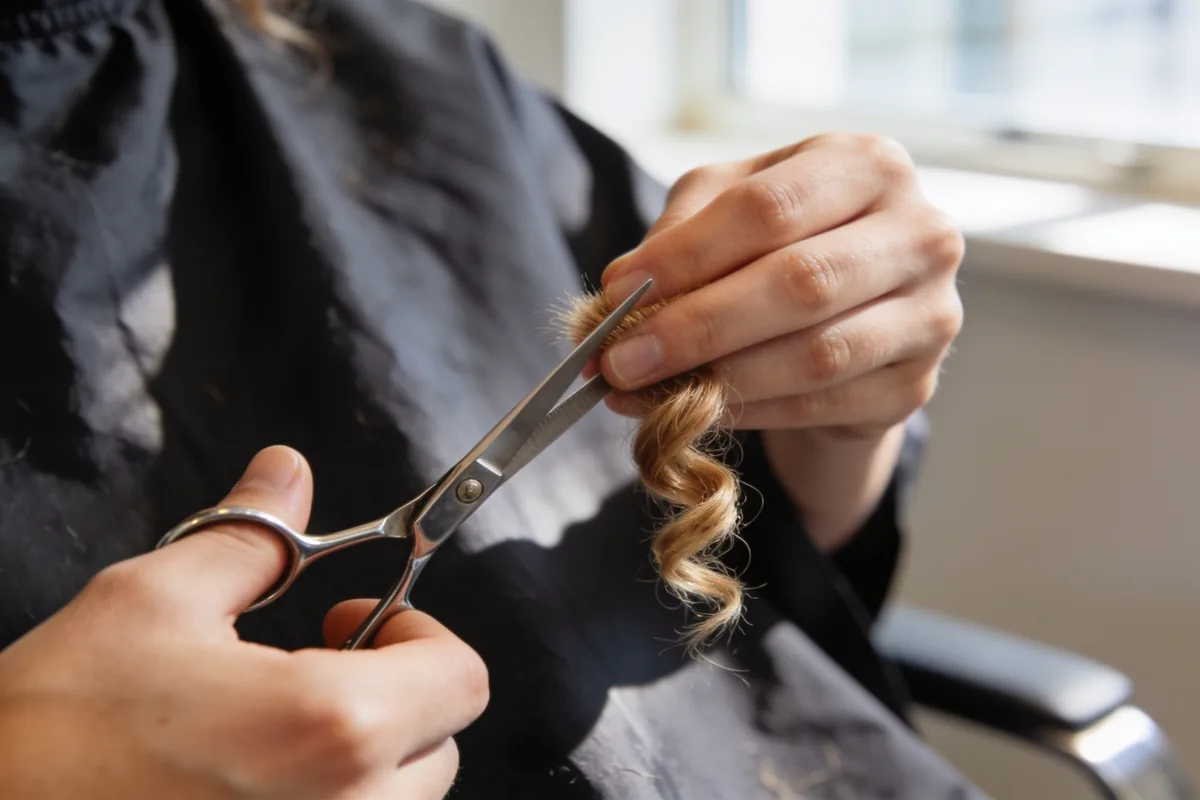
This is why a curly cut is usually done dry, curl by curl. Each curl is cut individually, at its natural length, so the shape lands where it should when the hair is dry and doing what it does every day. A wet cut is not automatically wrong for every head of curly hair, but it is the default that causes the most damage, and it is the first thing to ask about.
Textured hair training is not yet universal in Australian hairdressing. Some salons have it and many do not. That gap is exactly why the search for a specialist exists, and why the word “specialist” needs checking rather than trusting.
The cost of getting it wrong is not just a bad fortnight. People who have been through years of bad cuts describe the same endpoint: they stopped booking appointments altogether and learnt to trim their own hair, because the salon felt like a gamble they kept losing. That is a reasonable response to a run of bad luck. It is also why the search for a genuine specialist is worth the effort, because the alternative is a lifetime of ponytails and DIY trims.
What a real curl specialist does differently
The signs that separate a genuine curl salon from one that simply says “we do curly” are visible before any scissors come out.
They cut hair dry, or mostly dry. That is the largest single signal, because it is a different skill and a different way of working. They talk about curl patterns, wavy, curly and coily, and can usually tell you which one yours is and what that means for how it is cut. Their default is to style with products made for curls, not to reach for a straightener or a heavy blow-out to make the cut look good. They book enough time. A proper curly cut takes longer than a standard one, and a salon that rushes it is a salon that has not planned for your hair. And they can show you results, on other clients, without the hair being heavily styled.
There are smaller signs too. A genuine specialist asks how you wash and dry your hair at home, because what happens between appointments decides how the cut lands. They show you how to style it rather than handing you a finished look you cannot reproduce. And they are usually honest about what they cannot do, which is a rarer quality in a service business than it should be.
One point from people who have been through this is worth holding onto. Readers who finally found a good salon describe the same thing: the stylist cut curls all day, every day, and did not lean on a named method or a certificate wall. The gimmick test works in reverse. A salon that sells you a brand-name cutting technique may be excellent. But the salon that simply works with textured hair as its everyday job is the one with the evidence built in.
The consult is the test
Before you book a full cut, a good curl salon will want to talk to you about your hair. Not a five-second chat at the till, a real conversation: your routine, what you do and do not like about your current cut, how much styling you want to do day to day, and what happened in the past when it went wrong. A salon that skips this and offers you the next available chair is treating your hair as a standard service, which is the one thing curly hair is not.
The consult is also your chance to ask the questions that matter, and it helps to bring a short list:
- Do you cut dry, curl by curl?
- Have you worked with hair like mine, meaning your curl pattern and your hair’s thickness?
- Can I see photos of clients with hair like mine, without heavy styling?
- What does the price include, and is the styling or finishing extra?
If a salon does not offer a separate consult, use these questions at the start of a first appointment instead. The stylist should be asking at least as many questions as you are, because a good cut starts with what you do on a normal day, not what you do for a special occasion. Bringing a photo of your hair on a good day and on a bad day tells the stylist more than any description you can manage, so it is worth the few seconds it takes to find one.
Read the answers as much as the words. A salon that can show you clients with hair like yours, photographed in normal light, has done the work. A salon that cannot show relevant results is a risk, however warm the welcome and however many certificates are on the wall. And a salon that answers the questions with patience rather than defensiveness is showing you how it will treat you once you are in the chair.
What a curly cut should cost, and the price traps
Honest pricing is hard to give in a single figure, because it varies by city, by salon and by the length and density of your hair. The shape is consistent, though. In Australian capital cities, a specialist dry curly cut commonly sits in a higher band than a standard cut, with reader-reported figures clustering in the range of $120 to $180. That is indicative and it changes, but the point of the range is that it is higher than a standard cut for a reason.
The reason is time and skill. A dry curl-by-curl cut takes longer than a wet cut and blow-dry, and it is a specialist skill that fewer hairdressers have. You are paying for the method, not for a fancier waiting room.
The price traps run in both directions. The cheap general salon will cut your hair wet, straighten it to make the result look tidy, and send you home with a shape that falls apart after your first wash. The premium salon at the other end may charge for the name and the interior rather than the result. Between the two sits the actual question: is the price buying the method, or buying the label?
The price also reflects where the salon sits. A home-based stylist who specialises in textured hair is often cheaper than a salon in the city centre, and can be just as skilled, but needs the same vetting: ask the dry-cut question, look at the results, and book a consult before you commit. The setting matters far less than the method. And a wash and style after the cut is often part of the price, which is worth knowing before you compare quotes that look different but include different things, so ask what the quoted figure covers.
Cost is a signal, not a verdict. A high price does not guarantee a good cut, and a reasonable price is not proof of a bad one. What matters is what the price includes and whether the person cutting your hair is doing it the way your hair needs.
Build a shortlist, then choose
The search works best as a shortlist, the way you would choose any specialist. Start with your area and look for salons that describe themselves as working with curly or textured hair. Read the reviews for what they say about curly hair specifically, because a five-star salon for straight hair tells you nothing about how it handles yours. Look at their social feeds for un-styled curl results and real clients, not just the polished shots. Then book a consult. Some salons charge for the consult, and that is fair when the fee is credited against the cut, because you are paying for the stylist’s time and expertise.
In the reviews, look for people describing the same curl type as yours and what happened at their follow-up visit. A strong sign is a review that names a stylist rather than just the salon, because it means the skill and the relationship attach to a person you can also ask for by name.
City guides that list curly-friendly salons are a fine starting point, because they save you from trawling every salon in your area. Treat them as a list to work through rather than a ranking, and run the same checks on every name that makes the shortlist.
Local salons and hairdressers are listed in a local business directory, which is a reasonable place to start the list. From there, the consult does the work that no listing can.
One note for the search itself. If you have had bad cuts for years, it is easy to arrive at the consult already defeated, expecting to be told your hair is too hard to manage. A good specialist will not tell you that. They will tell you what your hair needs and whether they are the right person to give it to you. That honesty, offered before any money changes hands, is one of the best signs you have found the right salon.
A good curl cut is the start of the relationship
Once you find someone who cuts curls properly, the value compounds. You leave with a shape that works with your hair instead of against it. You learn how to handle it, because a good stylist tells you what they did and why. And rebooking gets easier, because they already know your hair and the consult gets shorter every time.
The search is worth doing properly, because the right person changes more than your haircut. It changes the belief that your hair is difficult. That is the real payoff, and it is why the extra effort of finding a genuine specialist, rather than the nearest salon with a free chair, pays for itself many times over.
Sources: Curly hair care references, the dry curl-by-curl cut method · State consumer affairs guides, choosing a hairdresser or beauty service · City and local business directories, hair specialist listings