
Mobile Mechanic vs Workshop: Which Is the Right Call for Your Car?
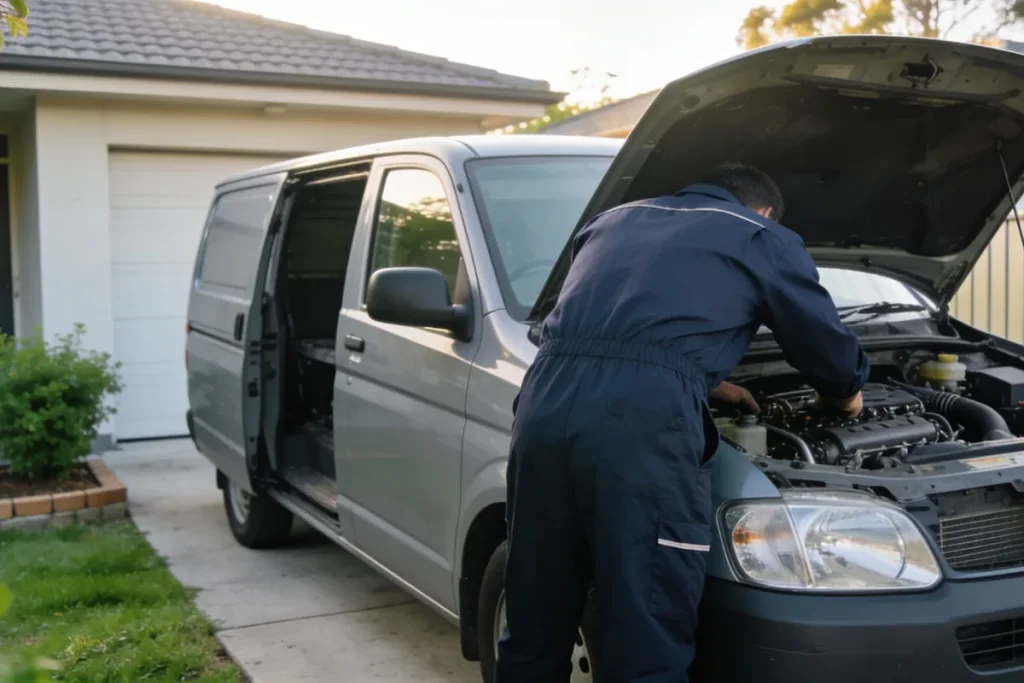
It is a Tuesday morning and your car will not start, or it is making a noise it did not make last week, or the logbook says a service is due and the week ahead is already full. The idea of a mechanic coming to you, pulling up in the driveway while you get on with your day, sounds wonderful. The question is whether it is the right call for the actual job.
Let me start by validating the appeal, because it is not laziness. A mobile mechanic removes the parts of car servicing that most people dread: the arranging of a lift, the sitting in a waiting room, the awkward phone call to say you will be late because the bus did not come. For a lot of routine work, the driveway genuinely is the better experience.
The honest frame is that mobile mechanics and workshops are different tools for different jobs. Neither is better in every situation, and the right choice depends on the work your car needs, not on which option is trendier or which one a friend recommended. This article is a guide to telling them apart. One note before you go on: this is general information. Your car’s warranty and logbook requirements are specific to the car, and a qualified mechanic is the person to confirm what they need.
The rest of this article walks through what each option does well, where it comes up short, and how to vet a mechanic who works from a van, because that last part matters as much as the comparison. A booking is only as good as the person who turns up.
What a mobile mechanic genuinely does well
A qualified mobile mechanic arrives in a van with the tools and parts for routine work, and there is a long list of jobs that fit comfortably in that setup.
Routine servicing is the heart of it: oil, filters, fluids, spark plugs. Brake pads and discs, where the car can be safely raised and the work does not need a hoist. Battery and starter replacements. Diagnostic scanning, which lets a mechanic read the car’s computer and identify a problem before deciding where it should be fixed. For a car that is drivable and needs maintenance rather than major surgery, most of these jobs can be done on the driveway as well as in a workshop.
A mobile mechanic brings the fluids and filters for your model, so a driveway service is not a cut-down version of the workshop one. It follows the same schedule a workshop would use. What the mechanic also brings is a set of limits, and those are worth knowing before you book, not after.
There is one use case where the mobile mechanic is not just convenient but the practical answer: the pre-purchase inspection. If you are buying a car from a private seller, the mechanic can go to the seller. A fixed workshop cannot do that, because the car is not yours to bring anywhere yet. Having a qualified mechanic look over a used car where it sits is one of the best uses of the driveway service there is.
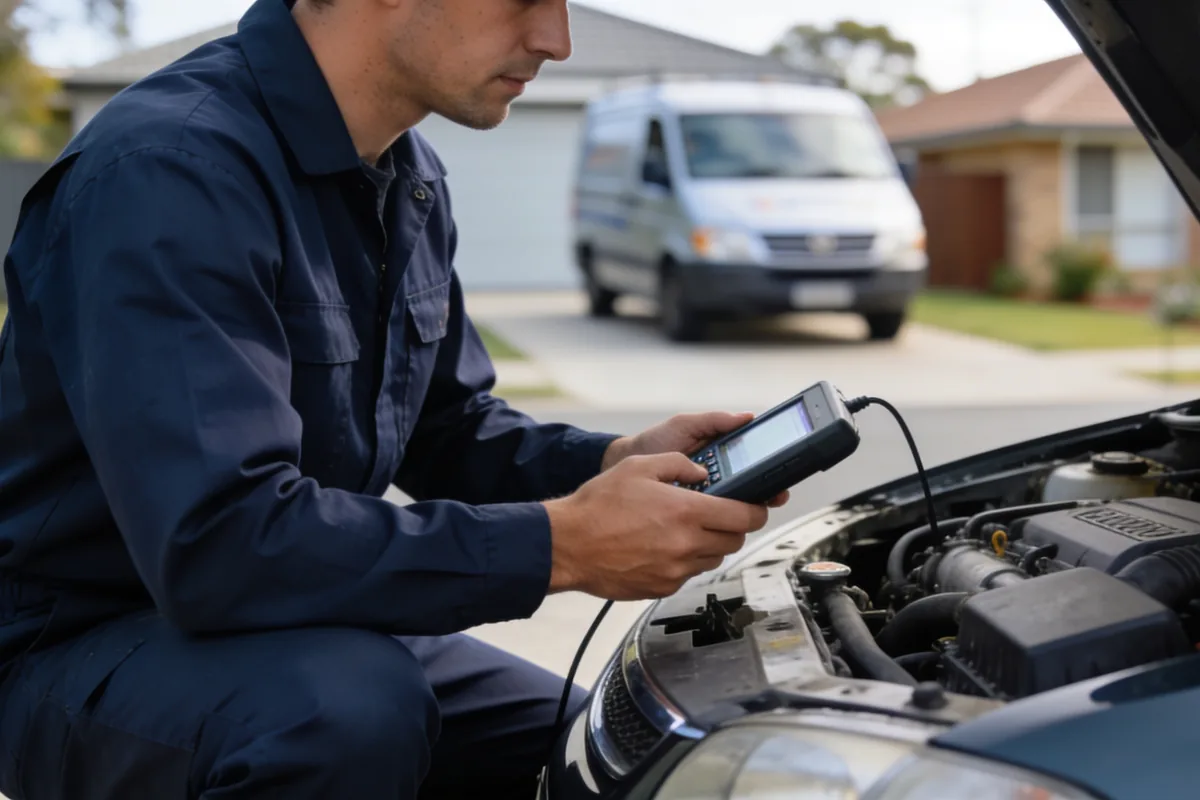
For the reader whose car is drivable and whose job is maintenance, the experience often feels clearer than a workshop visit. You can see the work as it happens, ask questions while the mechanic is actually looking at the car, and there is no dropping the keys at a counter and hoping. A qualified mobile mechanic can also carry out a logbook service and stamp the book, which keeps the service history intact and satisfies most warranty requirements. The caveat matters: confirm the mechanic’s qualification and confirm that the work follows the manufacturer’s service schedule, because that is what the warranty and the logbook actually require.
The driveway needs to suit the job too. A mobile mechanic needs a level place to park and enough room to work around the car, and sometimes access to a power point. Ask when you book whether your driveway works for the service, so nobody arrives and finds there is nowhere sensible to set up.
What genuinely needs a workshop
There are honest limits to what a mobile mechanic can do, and knowing them is how you avoid booking the wrong tool for the job.
A mobile mechanic works with what fits in a van. Jobs that need a hoist, a wheel alignment, tyre fitting and balancing, major suspension or exhaust work, transmission work, or extensive diagnosis with specialist workshop equipment are better in a fixed workshop. None of this is a judgement on mobile mechanics. It is simply that some work needs the car off the ground, the wheels aligned on proper equipment, or the workshop’s heavier tools.
A good workshop also brings continuity. It keeps a record of the work it has done on the car, has the space to leave the car overnight if a part has to be ordered, and can usually fit the car back in for follow-up work if a problem comes back. Those things matter more as a car gets older.
If the car is not driveable, the picture changes as well. A car that will not start on the driveway is exactly the kind of job a mobile mechanic can often rescue, because the car is already where the mechanic needs to be. A car that has broken down away from home is different, and a workshop, or a mobile mechanic who can arrange recovery, becomes the practical answer.
The way to use this section is not to memorise a list of do’s and don’ts. It is to ask the mobile mechanic directly what they can and cannot do with your specific job, and to take the honest ones at their word. A mechanic who says ‘this one needs a hoist, I cannot do it properly here’ has just saved you a wasted booking.
The honest cost comparison
Cost is where the two options are easiest to compare badly, so it is worth being plain about how it works.
A mobile mechanic does not carry the overheads of a workshop, the building, the hoists, the front counter, and that can show up in a competitive price on routine work. On the other side, a mobile service often includes a travel or call-out component, because the mechanic is driving to you. The per-hour figure is not the whole story. The whole story is the total price for the job, so ask for that total before agreeing to anything.
It is also true that the cheapest option is the one that does the job correctly the first time. A mobile mechanic is not cheaper if the job turns out to need a hoist, has to be stopped halfway, and then has to be done again at a workshop. That is why the ‘what can you genuinely do here’ question matters so much, and why the cost comparison belongs after the capability comparison, not before it.
For routine servicing and maintenance on a drivable car, the mobile option is often competitive and sometimes clearly better value once you count your own time. For a job that needs workshop equipment, the workshop is not the more expensive choice. It is the only choice that does the job once.
The way to compare properly is to ask two or three mechanics, mobile and fixed, for a written quote for the same job, then check that each quote covers the same work. Ask what the figure includes: parts, fluids, disposal of the old parts, and whether the price can move if the job turns out bigger than it looked. A mobile mechanic should also tell you the travel component up front, so the total you agree to is close to the total you pay. If one quote sits well below the others, ask why. The answer is either a good reason or a warning, and both are worth hearing before you book.
How to vet a mechanic who comes to your driveway
A stranger at your home deserves the same checks as a workshop, plus a few more, because the work is happening on your property rather than in a commercial one. The good news is that the checks are straightforward. Work through them in order and you will have a clear picture before anyone opens a bonnet.
Confirm they are a qualified mechanic, and ask what qualification they hold. A mobile mechanic should be able to tell you exactly what they are qualified to do, and how that qualification was earned.
Ask what work they are equipped to do, and be wary of anyone who says ‘everything’. The honest ones name their limits. A mechanic who talks freely about the jobs that need a hoist, and therefore need a workshop, is showing you how they think.
Ask whether their work carries a warranty, and whether they are insured. If the work is faulty, or something is damaged on your property, you want to know where you stand before the job starts, not after.
Get a written quote before they start, with the job and the total price on it. A quote that names the work protects both of you, and it is the record you go back to if the final bill does not match.
Check reviews with a grain of salt, and look for reviews that mention mobile work specifically. A workshop review and a driveway review are different experiences, and the reviews that describe the mobile visit are the ones that tell you what to expect.
For a logbook service, confirm they will stamp the book, and confirm that their work meets the manufacturer’s schedule. That is the detail that keeps the warranty intact, and it is worth having in writing.
Ask for the business name and a way to contact them after the job, an ABN or a physical address, and make sure you get a receipt when you pay. A traceable business is one you can go back to if the work needs fixing, which is exactly the situation where a mobile mechanic earns a repeat booking or a warning.
Local mobile mechanics and workshops are listed in a local business directory, which is a sensible place to start. The checks above are what turn a name in a directory into a mechanic you are comfortable having at your home.
A matching question, not a loyalty test
The decision comes down to the job, not the label. This is not a mobile-versus-workshop loyalty question, and it is not about which one your neighbour swears by. It is about matching the work to the right setup.
Keep a good workshop for the jobs that need one, the alignment, the heavy work, the jobs that need the car on a hoist. Try a well-vetted mobile mechanic for routine servicing, for the jobs that suit the driveway, and for the pre-purchase inspection that a workshop simply cannot do for you. Many drivers end up using both, and that is not indecision. It is using each option where it genuinely fits.
The goal, whatever you choose, is a car you trust and a mechanic who explains the work. Wherever the work happens, that is the standard worth holding out for. The mechanic who explains what they found, shows you the worn part and tells you what needs doing now rather than later is worth keeping, whichever side of the driveway they work from.
Sources: Australian consumer motoring guides, servicing and logbook requirements · State fair-trading guides, choosing an automotive repair business · Auto industry references, workshop equipment required for major repairs