
Roof Restoration Starts With a Pressure Clean That an Older Roof May Not Allow
 Tahlia Wrenwood
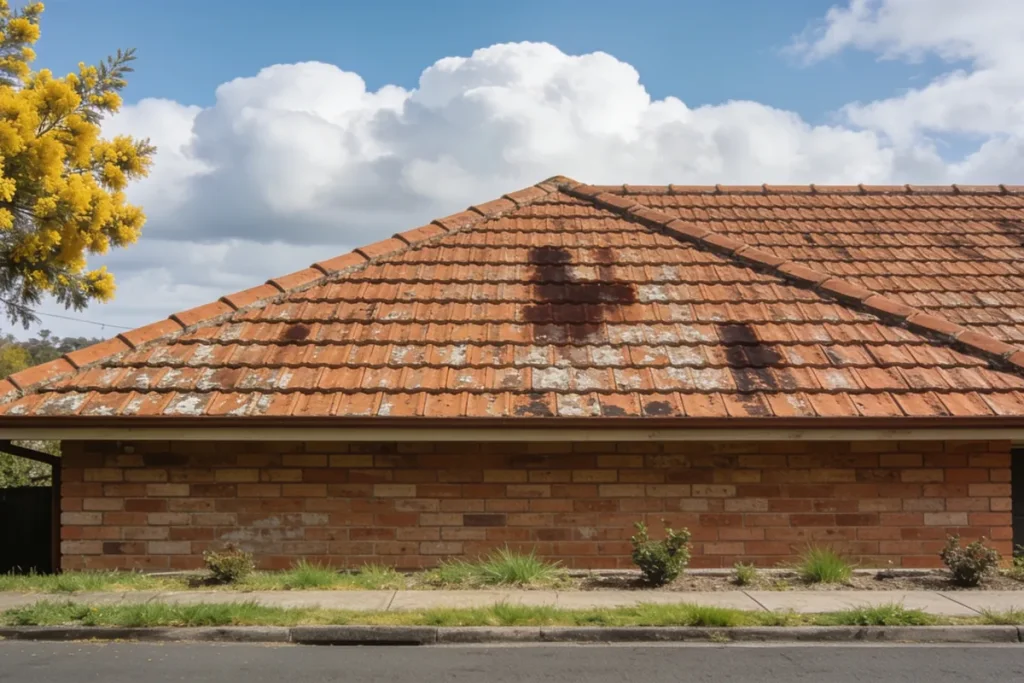
It is the end of September, and the storm months are not far off. If a roof is on your mind, quotes can arrive fast, and each one sells a slightly different fix. If you are comparing a few of them and feeling unsure which to trust, there is a straightforward way through.
Here is the view this guide takes. What should come first is knowing what the roof is made of and how it is holding up, written down, before any roofer quotes. On an older roof that starts with an asbestos check, because a restoration usually opens with a high-pressure clean and the regulators restrict high-pressure water on asbestos products (New South Wales says never, Victoria says not unless the use is controlled). For the right roof, a restoration is a sound choice, and we say so below. This is general information, not advice, and rules differ by state.
What a restoration usually includes
Roofers describe a restoration in fairly similar terms. A motoring-club trades page says it typically means a thorough clean (high-pressure cleaning), minor repairs such as replacing broken tiles, repointing, and painting or a protective coating, with ridge caps rebedded where their condition calls for it. A Brisbane roofer’s guide (updated 4 June 2026) adds removing old tile glaze, sealing or coating concrete tiles, cleaning moss and algae, and repairing flashing around chimneys and vents. Both are roofers’ own descriptions, not a standard, so scopes differ from one quote to the next.
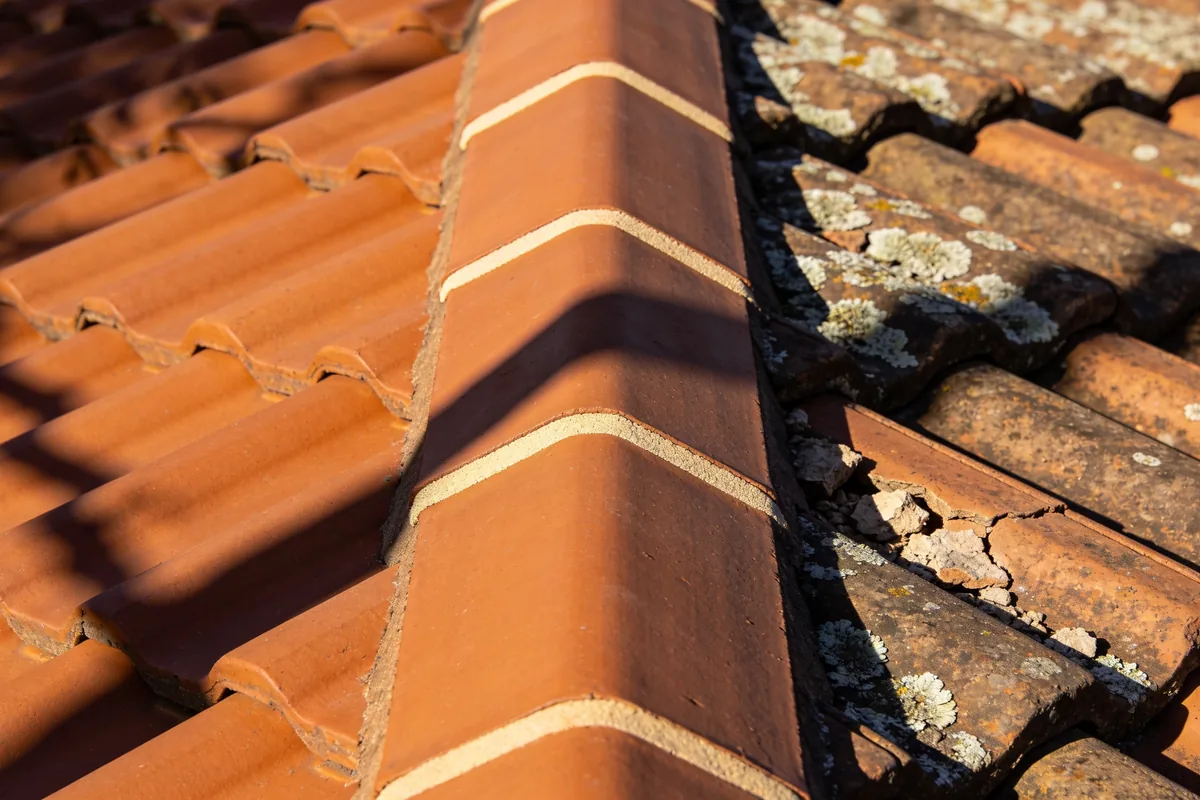
It helps to notice what is not on those lists. The sources describe surface and tile work, and none puts batten or framing repair inside a restoration. An Adelaide roofer’s blog (27 February 2026) goes further and treats rotting battens or framing as a reason to replace. So a restoration renews what sits on top of a sound structure, which is exactly why the structure needs checking first.
The first step an older roof may not be allowed
Most restorations open with a high-pressure clean, and that is where an older roof deserves a pause. The Victorian Asbestos Hub says a home built or renovated before 1990 is likely to contain asbestos, and that common roofing and exterior locations include corrugated roof sheets, ridge capping, guttering, downpipes and eaves. Asbestos was used in more than 3,000 products, and you cannot confirm it just by looking, because only laboratory testing of a sample can. None of that says your roof has any. It says the material has to be established, rather than assumed either way.
Two regulators single out the methods a restoration clean relies on.
- New South Wales. SafeWork NSW says high-pressure water and compressed air should never be used on asbestos products. Power tools may be used only if enclosed, designed to capture or suppress airborne fibres, or used in a way designed to do so safely. Water blasting is not listed as an allowed method.
- Victoria. WorkSafe Victoria’s safety alert (listed 1 September 2026) explains regulation 216 of the Occupational Health and Safety Regulations 2017. It applies to all employers and self-employed persons, who must not use a broom, a brush (unless used to seal the asbestos), a high-pressure water jet, a power tool or a similar tool on asbestos-containing material unless the use is controlled. The regulation does not apply if airborne fibre levels are at or below 0.01 fibres per millilitre while the tool is in use. Use is controlled while the tool is enclosed, or engineering controls such as on-tool water suppression or extraction are used, or both, and the controls must keep airborne fibres under half the exposure standard. Only personal atmospheric monitoring can show that.
Our ruling on the difference: the two wordings are not the same, and this guide claims nothing for other states, so read your own regulator’s page. But a controlled method means enclosure or engineering controls plus air monitoring, which is asbestos work and not a restoration clean. So treat an ordinary restoration crew’s pressure wash as not acceptable on asbestos material, and ask your own state regulator what applies where you live.
What to do, in order. If the roof is older and its material is unknown, the hub says it is safest to engage a qualified professional to inspect and sample, such as an asbestos surveyor, a hazardous materials consultant, an occupational hygienist or a building surveyor with specific training. Only a NATA-accredited laboratory can confirm the result. SafeWork NSW notes that asbestos roofs are brittle and a person can easily fall through one, a good reason to leave sampling to someone trained.
If asbestos is confirmed and likely to be disturbed, the hub says to engage a licensed asbestos removalist (a Class A licence for friable material, Class A or Class B for non-friable). Whether to manage, seal or remove an asbestos roof is a decision for an asbestos assessor or licensed professional, not for the firm selling the restoration. And nothing here says that tile roofs contain asbestos. The question is for sheeting, ridge capping, guttering and eaves.
Restore or replace: what the findings decide
For the right roof, restoration is a good outcome, and the trades pages say so. The motoring-club page describes repair as often the most cost-effective option for isolated issues such as a few cracked tiles or a localised leak, and says an older roof with widespread wear may be better replaced whole. One roofer’s page argues that, for a roof too far gone to restore, replacement is a better long-term position than spending on a surface that will not hold. The sources read here put no dollar figures on either, so this guide takes no side on cost. What they do offer is a list of signs.
Roofers’ published criteria, not a standard
| What the inspection finds | Usually points to restoration | Usually points to replacement |
|---|---|---|
| Tiles | Mostly intact, isolated cracks | More cracked than intact |
| Structure | Sound, no sagging | Sagging, or rotting battens or framing |
| Leaks | Minor, traced to flashing or pointing | Widespread or structural; a previous restoration that did not hold |
| Surface | Faded, chalky, moss, lichen, loose ridge caps | Not a reason to replace on its own |
| Age | Roofer pages disagree (below) | Older roof with widespread wear (one page) |
| Material | Confirmed not asbestos | Asbestos present: not a restoration job as described; an assessor and licensed professional decide |
The age row deserves a ruling. The Adelaide blog says restoration suits roofs under roughly 25 to 30 years old with mostly intact tiles, while the Brisbane guide’s rule of thumb is a restoration roughly every 15 years. Those are two roofers’ differing numbers, and no regulator sets an age. So use condition, not age. The Adelaide blog adds that minor leaks are usually flashing or pointing problems and not structural, which is good news when it holds.
One more kind point. The Adelaide blog advises having the roof inspected by a roofer who does both restoration and replacement, because single-service firms may lean toward their own service. That is no accusation of anyone. A firm that sells one fix naturally has a reason to prefer it, and it is simply a reason to have the findings in writing.
Getting the roof looked at before anyone quotes
There are three sensible routes: a roofer who does both restoration and replacement, a building inspector or roof report, or an asbestos assessor for the material question. They can be combined. The Brisbane guide advises in-person inspections over online estimates, and itemised quotes. Ask whoever inspects to write down:
- the material and approximate age of the roof
- the asbestos status, or advice on sampling
- the condition of the tiles
- ridge caps and pointing
- flashings and valleys
- battens and underlay, seen from the roof space or where tiles are lifted
- where any leaks come from
- any earlier coating
- photos of each finding
Then take the same written findings to each roofer, so the quotes answer the same questions and can be compared. To be plain, this order (inspect, then quote) is our recommendation, and no regulator requires it.
Here is how the findings can read, using three invented roofs on one street to show the order of the checks. The first is a tile roof with scattered cracked tiles, chalky colour, a flashing that leaks in heavy rain and sound battens seen from the roof space. Those findings point to restoration. The second has more tiles cracked than whole and two soft battens. They point to replacement, and a restoration quote would be money spent on the surface. The third is a sheet roof on a house built before 1990, with ridge capping of unknown material. The next step there is neither quote. It is a sample and a laboratory result.
If your roof feeds a tank
If rainwater runs from the roof into a tank, one more check applies. The Victorian Government’s water department (page updated 20 May 2026) says not to collect rainwater from roofs with lead-based paint or flashing, bitumen-based products or exposed treated wood. So ask what any coating is, and whether its maker says it suits a roof that feeds a tank. No source read says any particular coating fails. Our mid-September guide to what a rainwater tank quote should cover goes through the plumbing side.
Six questions for each roofer
Put these in a friendly way and keep the written answers. To find local roofers to ask, the Roofing & Guttering category is a start.
- Which of the written findings does your quote deal with?
- What cleaning method will you use on my roof’s material, and why?
- How many tiles and ridge caps are in the repair scope?
- What are the coating warranty’s terms? The Brisbane guide notes that a coating maker’s warranty applies only to roofs never previously coated or painted, so ask whether it depends on the roof’s coating history and on who applies it.
- Which licence and insurance cover this work, and what is the number to check at the state regulator? If someone offers to just do the roof as a side job, our guide to a handyman versus a licensed specialist sets out which work needs a licence.
- What happens if you find material you suspect is asbestos once work has started? The right answer is to stop and test.
Read the quote’s scope the way you would read any building contract. Our list of questions to ask a builder covers what the paper should commit each side to.
Test the roof, then price the work
A restoration is a sound choice for a roof that is structurally good, with mostly intact tiles, and such a roof is worth giving the chance. The quote does not decide it. The material and the condition do, written down by someone who is not selling a fix. On an older roof, the first line on that page should be what the material is. Test it, take the same findings to each roofer, then price the work.
Sources: Where is asbestos?, Victorian Asbestos Hub (https://www.asbestos.vic.gov.au/where-is-asbestos/); How to identify asbestos safely, Victorian Asbestos Hub (https://www.asbestos.vic.gov.au/how-to-identify-asbestos-safely); Use of power tools on asbestos, WorkSafe Victoria (https://www.worksafe.vic.gov.au/safety-alerts/use-power-tools-asbestos); Asbestos, SafeWork NSW (https://www.safework.nsw.gov.au/hazards-a-z/asbestos); How to get the most out of your rainwater tank, Victorian Government (https://www.water.vic.gov.au/water-sources/diverse-water-sources/how-to-get-the-most-out-of-your-rainwater-tank); An Adelaide roofer’s blog on restoration or replacement, 27 February 2026; A Brisbane roofer’s guide to roof restoration, updated 4 June 2026; Roof repairs and roof restoration, RACV (https://www.racv.com.au/home/repairs-maintenance/roof-repairs.html)