
Choosing a Carpet Cleaner: Steam, Dry or Encapsulation, and the Quote That Says Which
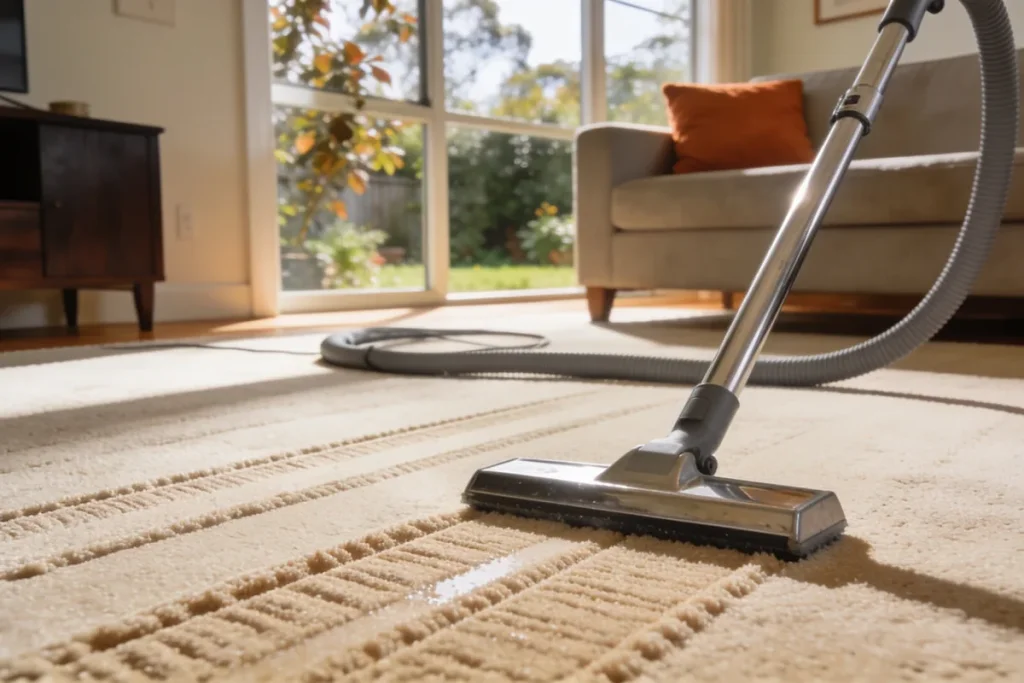
A householder who asks three companies for a carpet cleaning quote will often receive three different methods at three different prices. One offers steam cleaning, one offers a “dry” clean, and the third mentions encapsulation, a term most people have not met before. The prices are hard to compare because the services are not the same, and the quote that does not name its method at all is the one to question first.
This guide compares the three main methods, explains where the Australian Standard and carpet warranties come into it, lists what a carpet cleaning quote should itemise, and covers stains, odour and drying. It finishes with the checks worth making on the company itself.
The methods, side by side
Carpet cleaning methods differ mainly in how much water they use and how they remove the soil. That single variable drives most of the practical differences: how deep the clean reaches, how long the carpet takes to dry and which situations each method suits.
Hot water extraction, commonly called steam cleaning, injects hot water and a cleaning solution into the carpet pile under pressure and then extracts it, with the loosened soil, using a powerful vacuum. Despite the name, it does not use steam in the usual sense.
Low-moisture or “dry” methods use far less water. A compound method spreads an absorbent cleaning powder over the carpet, works it into the pile with a machine and then vacuums it up. A bonnet method uses a rotating pad, dampened with a cleaning solution, to lift soil from the surface of the pile.
Encapsulation applies a cleaning solution that surrounds the soil and dries into a brittle residue, which is then removed by vacuuming. It is also a low-moisture method.
| Method | How it works | Moisture and drying | Suits | Limits |
|---|---|---|---|---|
| Hot water extraction (“steam”) | Hot water and solution injected, then extracted with the soil | Most moisture; longest drying of the three | Heavier soiling; deeper cleaning; warranty conditions that require it | Carpet must be left to dry properly; over-wetting is a risk with poor technique |
| Low-moisture (“dry”): compound or bonnet | Absorbent compound or a dampened rotating pad lifts soil from the pile | Little moisture; carpet usable sooner | Light soiling; regular maintenance; areas that cannot be out of use for long | Works mainly near the surface; may not reach deep soil |
| Encapsulation | Solution surrounds soil and dries to a residue that is vacuumed away | Low moisture; quick drying | Maintenance cleaning between deeper cleans | Less suited to heavy soiling; depends on thorough vacuuming afterwards |
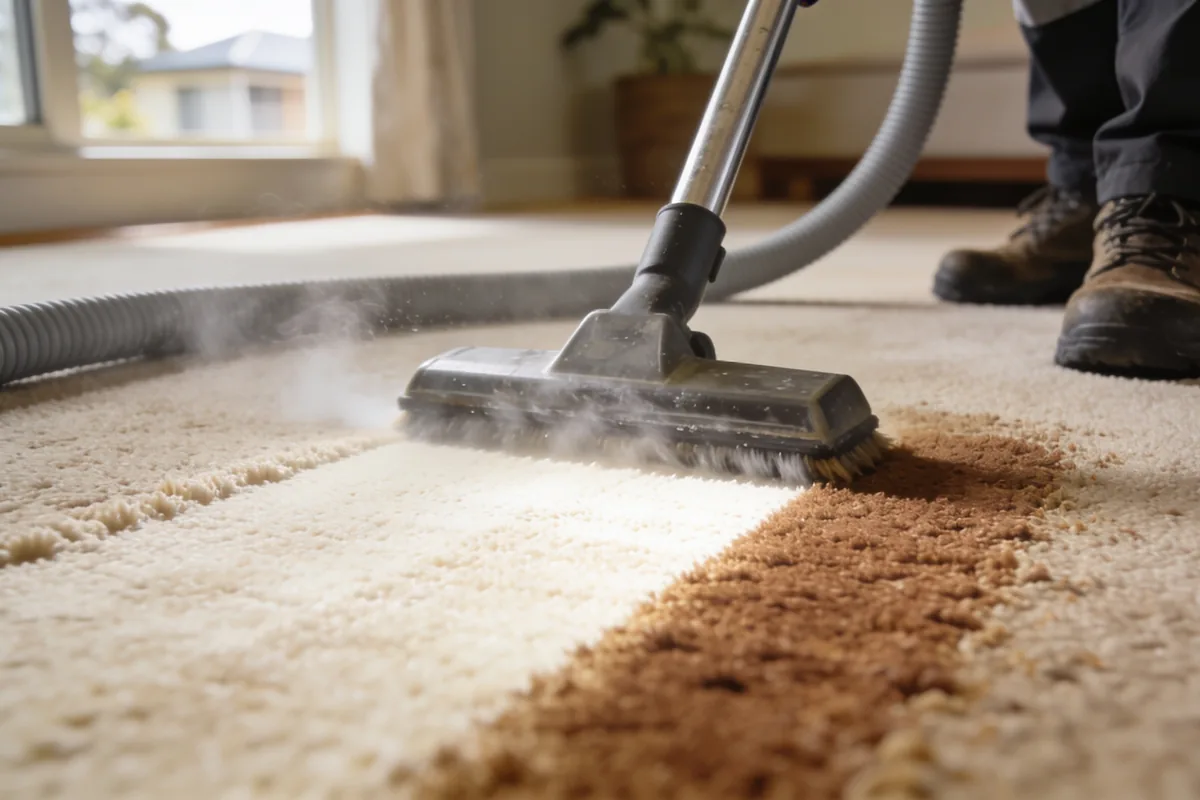
No method is best in every case. A lightly used bedroom carpet may need nothing more than a low-moisture clean, while a heavily trafficked hallway or a carpet with an old spill may need hot water extraction to reach the soil at the base of the pile. The table is a guide to which questions to ask, not a ranking.
The carpet itself is the other variable. Fibre, construction and age all bear on which method a cleaner should choose. Ask the cleaner to identify the carpet before quoting and to explain why the method suits it. A company that can do so is choosing a method for your carpet rather than applying the one it always uses.
What matters for comparison is that the quote names the method. Two quotes for “carpet cleaning” may describe a hot water extraction of every room and a bonnet clean of the same rooms, and the second will often be cheaper simply because it is less work.
What the standard and the warranty say
Australia has a standard for this work. AS/NZS 3733:2018, published by Standards Australia, sets out requirements, techniques and guidelines for the cleaning maintenance of residential and commercial carpet. It is the reference a professional carpet cleaner should know. A householder does not need to read it, but it is reasonable to ask a company whether its methods follow it. A useful follow-up is to ask what following the standard means for the method proposed on your carpet. A specific answer carries more weight than a general claim of compliance.
Carpet warranties are the more immediate concern for many households, and they can determine the method. As one example, the warranty for Victoria Carpets’ UltraPet range, published by Carpet Court, requires proof of professional steam cleaning, meaning hot water extraction, when a stain claim is made. That is one manufacturer’s terms, not an industry rule, and other warranties may say something different or say nothing on the point.
The lesson is general, though. Before choosing a method, check the warranty that came with your carpet, if you still have it. If it specifies a method, choose that method, and keep the invoice that names it. An invoice that says only “carpet cleaning” may not be enough to show that the warranty’s condition was met.
What the quote must itemise
A carpet cleaning quote should allow a householder to see exactly what is being bought. The following lines should appear, in writing, before any work begins:
- The rooms to be cleaned, or the area in square metres.
- The method, named.
- Pre-treatment of traffic areas, if included.
- Stain treatment, priced separately.
- Odour treatment, priced separately.
- Furniture moving: what the company will move, and what it will not.
- Stairs, if any, priced separately or included.
- Deodoriser or carpet protector, if offered, priced separately.
- Any travel charge or minimum charge.
- The guarantee, for example a re-clean if spots return within a stated period.
Several of these lines tend to be where the total grows. Stain and odour treatment, stairs and protector are often offered as additions on the day. Pricing them separately in the quote lets the householder decide in advance which are wanted, rather than at the door. The minimum charge matters for small jobs: a quote for one room may be governed by the minimum rather than by the room rate.
To make three quotes comparable, send each company the same information: the list of rooms, any stairs, the stains you know about and what caused them, and whether there are pets. Ask each to name its method in writing. The quotes that come back will then differ on price, method and inclusions, and those differences can be read directly.
A quote given over the phone, without anyone seeing the carpet, is necessarily provisional. Ask whether the price can change on arrival and on what grounds. A company that sets those grounds out in advance, such as heavier soiling than described or extra stains, is easier to deal with than one that revises the price at the door without explanation.
The guarantee deserves a direct question. Some marks can reappear in the days after a clean. A company that offers to return if that happens is taking some of the risk of the result. One that does not is leaving all of it with the customer.
Stains, pet urine and odour
Stains fall into two broad groups for the purposes of a quote. A spot treatment addresses marks on the surface of the pile and is often enough for food, drink and soil. Pet urine is different. It is commonly treated with an enzyme product designed to break down the urine itself, not only the visible mark.
Odour can be the harder problem. Urine that has soaked through the carpet may have reached the underlay, and a treatment applied only to the surface may leave the source of the smell in place. Ask the cleaner whether they assess the underlay, whether their treatment reaches it, and what they will do if the odour remains.
It helps the cleaner to know the history of each stain. Tell them what caused it, roughly when, and what has already been tried on it, including any product used. That information shapes the treatment, and it gives the cleaner a fair basis for saying in advance how likely the mark is to come out.
Above all, ask what result is being promised and what is not. A cleaner who says some stains may not come out entirely is being straightforward about the limits of any method. A quote that promises every mark will disappear, before anyone has looked at the carpet, should be read with some caution.
Drying time and after-care
Drying time depends on the method, the carpet, the weather and the ventilation, which is why this guide gives no figure. What the householder controls is the timing and the after-care.
Timing is the simpler of the two. Where there is a choice, book the clean for a dry, mild spell rather than a cold, damp week, and avoid scheduling it the day before guests arrive or furniture is delivered. Hot water extraction in particular needs time and air to dry, and the job goes better when nothing has to go back on the carpet in a hurry.
Ventilation helps most. Open windows where the weather allows, run fans, and use air-conditioning if it is available, since it removes moisture from the air. Keep foot traffic to a minimum while the carpet is damp, and walk on it in clean socks rather than shoes or bare feet.
Furniture needs particular care. Where furniture has to go back before the carpet is dry, place blocks or foil under the legs, so that the wood or metal does not sit directly on damp pile. A common question is what to do when furniture has already been placed on a wet area. The practical answer is to lift it, put protection under the legs and let the area dry with as much airflow as possible. Then check the spot once it is dry for any marks from the legs.
Vetting the cleaner
The method and the quote cover what is being bought. The checks below cover who is doing it.
- Public liability insurance, confirmed in writing.
- Equipment: whether the company uses truck-mounted or portable machines, and why it uses that equipment for this job.
- Time in business, and whether it can provide references.
- Who will do the work: the company’s own staff, or subcontractors.
- A written price, agreed before work starts.
The fourth point is the one most often missed. A company may quote the job and then send a subcontractor, who may work to different standards or use different equipment. Asking at the quote stage avoids surprises on the day.
Carpet cleaning is often part of a larger event, such as moving out of a rental or moving house. If the clean is for the end of a lease, this site’s guide to vetting a bond cleaner covers the wider job. If it is one item in a house move, the same itemised approach applies when reading a removalist quote.
Name the method, then the price
Three carpet cleaning quotes are comparable only when each names its method. Hot water extraction uses the most water and reaches deepest; low-moisture methods and encapsulation dry faster and suit lighter or maintenance cleaning. AS/NZS 3733:2018 is the standard a professional should work to, and a carpet’s own warranty may specify the method, as at least one manufacturer’s does.
Once the method is fixed, compare the quotes line by line: rooms or area, pre-treatment, stain and odour treatment, furniture, stairs, extras, minimum charge and the guarantee. Then check the company’s insurance and who will do the work. The price is the last thing to compare, not the first.
Sources: Standards Australia, AS/NZS 3733:2018 Textile floor coverings: cleaning maintenance of residential and commercial carpeting (https://store.standards.org.au/product/as-nzs-3733-2018); Victoria Carpets UltraPet carpet warranty, via Carpet Court (https://www.carpetcourt.com.au/media/Warranty%20Web%20Docs/VC%20-%20UltraPet%20Carpet%20Warranty%20V.1.1.pdf)