
Air Conditioner Service Before Summer: What a Service Includes and How to Choose a Technician
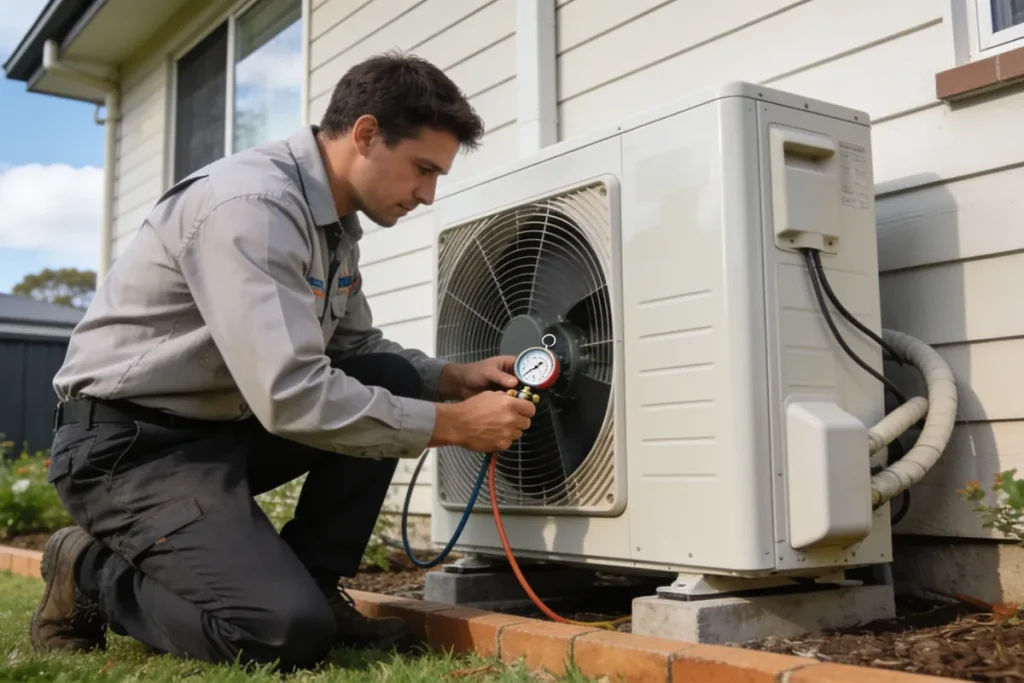
The pre-summer window is a planning decision
The cheapest and most reliable time to find a cooling fault is before the first heatwave, when technicians still have open bookings and the weather has not turned the phone into a switchboard. In most of Australia the pre-summer window runs through spring, roughly October to November, and earlier in the tropics. A reader who plans ahead gets two things an emergency caller does not: the choice of technician, and the time to fix whatever the service finds before it matters.
That makes this a planning decision, not an emergency. It is best made calmly, in the spring, while the air conditioner is still only a possibility in the reader’s mind rather than a failing machine in a heatwave.
The timing matters for a practical reason beyond price. A fault found in spring is usually a small fault: a capacitor on its way out, a coil that needs a proper clean, a drain line that is slowly blocking. The same fault found in January is an emergency, because the unit is needed that night and every good technician in the area is already booked. Booking early turns a potential emergency into a scheduled repair.
This article is general information about air conditioner servicing and how to choose a technician, not a recommendation of any one business. Service practices, licence requirements and warranty rules all carry local variation, so treat the checks here as the starting point and confirm current requirements with the relevant authority for the reader’s state before booking.
What a pre-summer service actually includes
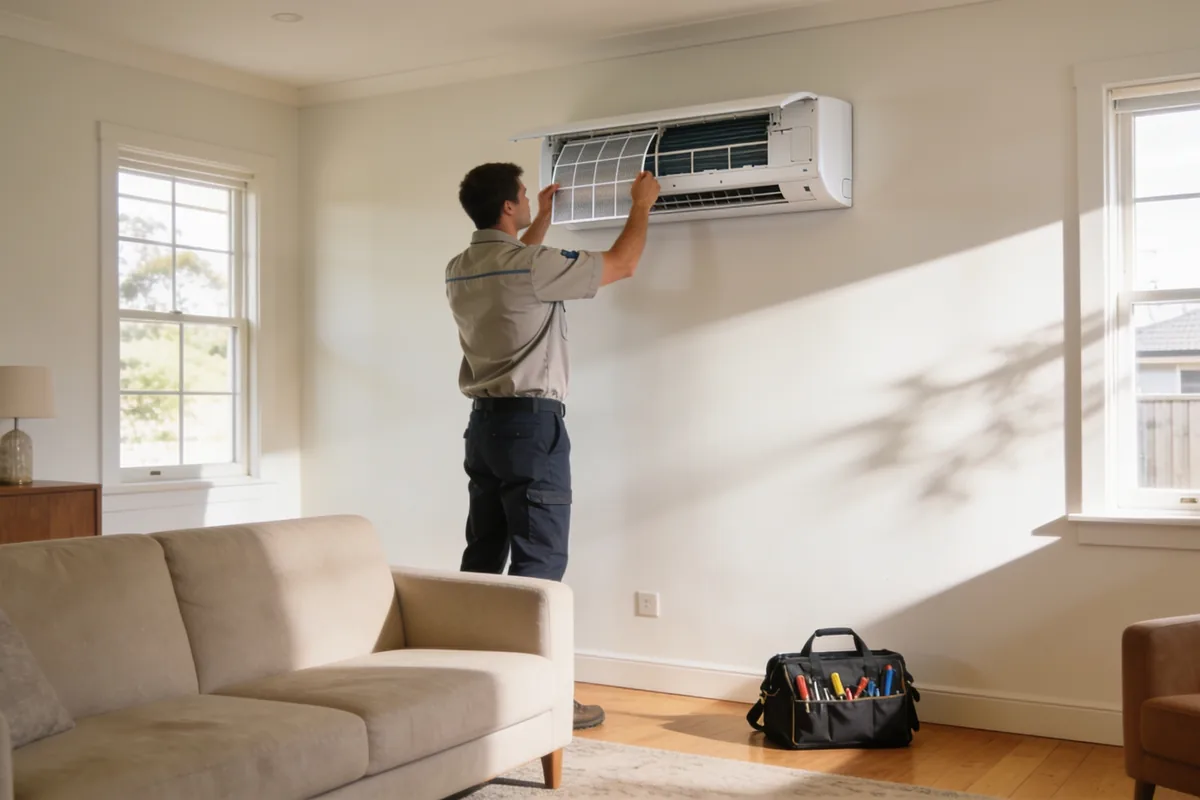
A genuine service visit is a maintenance check with a specific list of jobs, and the reader should know what that list is before anyone arrives. Practices vary between operators, which is precisely why the list matters: some advertised services are little more than a filter clean and a rinse of the outdoor unit, and a reader who has been promised a service should know whether that is what they are paying for.
| What a genuine service normally covers | What a cut-price service special often skips |
|---|---|
| Cleaning or replacing the filters | A filter rinse, presented as the whole service |
| Checking and cleaning the indoor coil, drain line and fan | Checking the coil but not cleaning it |
| Checking the outdoor condenser coil and clearing debris around the unit | Spraying the outdoor unit with water and stopping there |
| Checking refrigerant pressures and looking for leaks | No refrigerant check at all |
| Checking electrical connections and controls | No electrical inspection |
| Running the unit to confirm cooling performance | Leaving before the unit is run and tested |
The load-bearing question is a simple one to ask when booking: what will the visit check? An operator who answers with a list that resembles the table above is offering a service. An operator who answers with a price and a promise is offering something thinner, and the reader deserves to know which one they are buying.
A reader can do part of the check themselves before booking. Look at the filters: if they are filthy, the unit is working harder than it should, and a clean set may improve things on its own. Clear leaves and debris from around the outdoor unit. Those two steps are not a service, but they mean the technician starts from a better position, and the service money goes to the deeper checks rather than the obvious ones.
What a service does not do
The honesty section separates this post from the operator pages, because the operator pages rarely say it. A routine service is not a repair, and it will not fix a fault the unit already has. If the air conditioner is throwing an error code, blowing warm air or leaking, the reader needs a repair diagnosis, not a service special, and booking a service in the hope that it will fix a known fault is usually a wasted visit.
A service is a maintenance check. It reduces the chance of a mid-summer failure, keeps the system running efficiently, and gives the technician a chance to find a small problem before it becomes a large one. That is the honest answer to the is it worth it question: a pre-summer service is worth it as prevention, and it is not worth it as a fix.
There is a related point about a unit that has not been serviced in years but is running fine. The first service is the one most likely to find a developing problem, because it is the first proper look inside. A technician who opens a unit that has run untouched for five years and finds a blocked drain or a struggling fan motor has saved the reader from a mid-summer failure, which is exactly what the pre-summer service is for.
There is a second half to that honesty, and it comes from the technicians themselves. A lightly used unit with clean filters and clear airflow may not need an annual visit at all, and an honest technician will say so rather than take the booking. The reader who is told they do not need a service this year has found a technician worth keeping, not a salesperson who missed an opportunity.
How often is a service genuinely needed?
Frequency guidance is best kept non-dogmatic, because the honest answer depends on the system, the climate and the way the reader uses the unit.
- Heavily used systems generally benefit from an annual service. Ducted air, and split systems that run for many months of the year, work harder and accumulate more dust and moisture.
- A lightly used unit with clean filters may go longer between services, and a reader who cleans the filters and keeps the outdoor unit clear may reasonably stretch the interval.
- Humid climates justify more frequent attention. In the parts of Australia where the indoor unit can grow mould, not just dust, a service every 12 to 18 months is a reasonable precaution, and a reader who has seen mould inside the unit should not wait.
- Warranty conditions matter. Some manufacturers require proof of regular servicing to keep a warranty valid, so the reader should check their warranty terms rather than assume.
The everyday part of the maintenance belongs to the reader, and it is most of the job anyway. Cleaning or replacing the filters is a simple task on most split systems, and keeping the outdoor unit clear of leaves and debris takes minutes. A reader who does those two things has already done the bulk of what keeps a unit running well, and the annual service becomes the deeper check rather than the only check.
One system type deserves a specific note. In a ducted system the filters usually sit in the ceiling returns, where they are easy to overlook, and the runs of ducting give dust a long way to travel. That is one reason a ducted system, cooling many rooms for months on end, is a strong candidate for the annual service rather than the stretched interval.
The licence and refrigerant reality
Work that connects, disconnects or handles refrigerant is regulated, and the reader should understand the shape of that regulation before booking. A technician who handles refrigerant should hold the relevant refrigerant handling licence. The ARCTick scheme is the national training and registration framework to confirm this against, and a reader can check a technician’s refrigerant licence through the Australian Refrigeration Council rather than taking a logo on a van as proof.
Electrical work is covered separately, by state and territory electrical licensing, and a technician who opens up the electrical side of the unit should be licensed for that work in the reader’s state. The reader should ask whether the technician is licensed for the work being quoted, and should expect them to be insured.
The service inclusions belong in writing before the visit, the same way they would for any trade. A short confirmation that names the checks to be done protects both sides, and a technician who sends one without being asked is showing how they work.
No article can carry the current detail of every state’s licensing rules, and none should try. The reliable instruction is to confirm against the authorities: the Australian Refrigeration Council for refrigerant work, and the state or territory electrical licensing authority for the electrical side. A technician who is properly licensed for both will answer the question without hesitation, and a reader who asks is doing exactly what a careful customer should.
Choosing the technician: what to ask before you book
The second half of this post is the vetting method, and it follows the same shape as any good service decision. Shortlist two or three local businesses, ask each the same questions, and compare the answers on the same list.
The directory that this site runs holds real Air Conditioning Expert listings, and the questions below apply to every operator in that category. A Melbourne reader, for example, might begin a shortlist with Answer Air Services, an Air Conditioning Expert whose work covers installation, service and repair. A reader in the western suburbs could add MD Cooling, an Air Conditioning Expert based in Ravenhall, and a reader in the Illawarra region has Wollongong Aircon Guy, a service and repair operator covering Wollongong and surrounds. The point of the shortlist is not that any one of these is the right answer for every reader. It is that the same set of questions gets asked of each, and the answers decide.
The questions to ask, of every business on the shortlist:
- What does the service include, and can the reader see the list before booking?
- What does it cost all in, with no surprise line items on the day?
- Is the work done by a licensed technician, and is that person licensed for the refrigerant and electrical work involved?
- Will the technician show the reader what they found? Photos of a clogged coil, a blocked drain or a pressure reading are a good sign, because they turn a claim into evidence.
Compare the answers side by side, in writing. The business that answers all four questions in plain language, with a list and an all-in price, has made the decision easy. The business that goes quiet when asked for detail has answered in a different way, and the reader does not need to chase it.
Two warnings belong beside the method, both drawn from the honest end of the trade. Be wary of a very cheap service special, because a filter clean presented as a full service is the oldest upsell in the category. And remember the honest technician’s point from earlier: if the filters are clean and the unit runs well, the reader may not need an annual visit at all. A technician who says so has earned the reader’s trust, and the reader should keep that number for when a service genuinely is due.
Book the service before you need the service
The pre-summer service sits between two exaggerations. It is not a luxury, and it is not a rip-off. It is a cheap insurance policy against booking a repair in the middle of the first heatwave, when the good technicians are busy and the emergency callout prices are at their highest.
The reader who books in the spring, knows what the visit will check, and holds the technician to a real checklist gets the benefit of the service. The reader who waits until the unit fails gets the emergency callout, and pays for the urgency as well as the repair. That is the whole difference, and it is a difference the reader controls.
The decision rule is a short one, and it applies in every state. Check the filters yourself and keep the outdoor unit clear, because that is most of the routine maintenance. Book a licensed technician in the spring window, and ask what the service includes and what it costs all in before anyone arrives. And if the unit is already misbehaving, treat it as a repair job, not a service, because the service is prevention and the repair is the cure. This remains general information rather than a steer towards any single business, and the licensed, insured technician who explains their checklist is the one the reader should be happy to rebook.
Sources: Australian Refrigeration Council, refrigerant handling licence (ARCTick) · your state or territory electrical licensing authority · RACV, air conditioner servicing and maintenance before summer