
How to Choose a Wedding Photographer: It Is Not Just About the Photos
The one person who is there for all of it
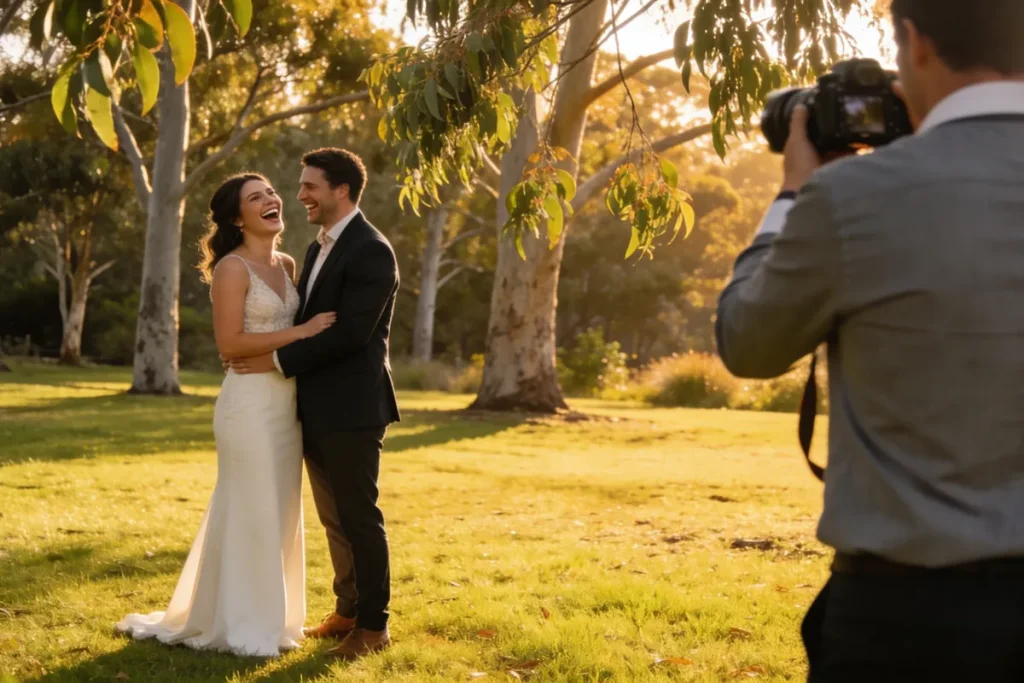
There is a moment on every wedding morning that the couple does not notice. The room is quiet, the nerves are settling, someone is doing up buttons and checking hair, and in the corner a person is already working, camera low, not intruding, catching the half smiles and the fiddling hands that no one else sees. The photographer is the first vendor to arrive and usually the last to leave. They are there for the getting-ready quiet, the ceremony wobble, the group shots on the lawn and the last dance when the shoes are off.
It is a strange thing to realise: on the longest, most emotional day of your life, the person holding the camera is beside you for more of it than almost anyone else. Your grandparents will be there for part of it. Your closest friend will be there for most of it. The photographer is there for all of it, and that changes what the choice is really about.
Choosing a wedding photographer is not only about liking their photos. It is about choosing someone whose presence you will enjoy and whose judgement you can trust when the day gets loud, or tearful, or chaotic. The good news is that both halves of that decision are learnable. The photos are judged by looking at the right things, and the person is judged by talking to them. This article walks through both, the way a friend who has been through it would.
Start with the style you keep coming back to
Before you shortlist anyone, spend a little while looking at wedding photos and noticing which ones you save. Not the ones you think are impressive. The ones you keep scrolling back to. Some couples save bright and airy images with soft whites and light-filled rooms. Some save moody, darker frames with deep shadows. Some save true-to-colour shots that look like the day actually looked, and some save film-style images with grain and muted tones. And separately, some couples keep saving the candid, documentary frames, while others keep saving the classic posed portraits.
The style you keep coming back to is the starting point, because it does two jobs at once. It tells you which photographers to shortlist, and it gives you the language to describe what you want when you write to them. Say the words out loud to each other: bright or moody, true-to-colour or film-like, candid or posed. You do not need to be a photographer to name a preference, and you do not need to apologise for it.
One honest note belongs here. Style is a preference, not a judgement. There is no objectively best wedding photographer, and a couple that loves dark, moody frames is not wrong next to a couple that wants everything bright and airy. What matters is fit: a photographer whose consistent look matches the way you want to remember the day. That is why the phrase is consistency, not beauty. A photographer can produce a beautiful frame of anything. The question is whether their body of work looks like your kind of beautiful, again and again.
Look at a full gallery, not the highlight reel
Anyone can publish thirty best images. The best images from any wedding, in the hands of any competent photographer, will look lovely, because the light was good, the couple was happy and the flowers were fresh. The highlight reel is not the test. The full gallery is.
This is the single highest-value check in the whole decision, and it is the one most couples skip. When you have shortlisted a photographer, ask for two or three complete galleries from start to finish. Not the portfolio, not the Instagram grid, not the blog post with the twelve best frames. The whole gallery from a real wedding, from the getting-ready shots to the last dance.
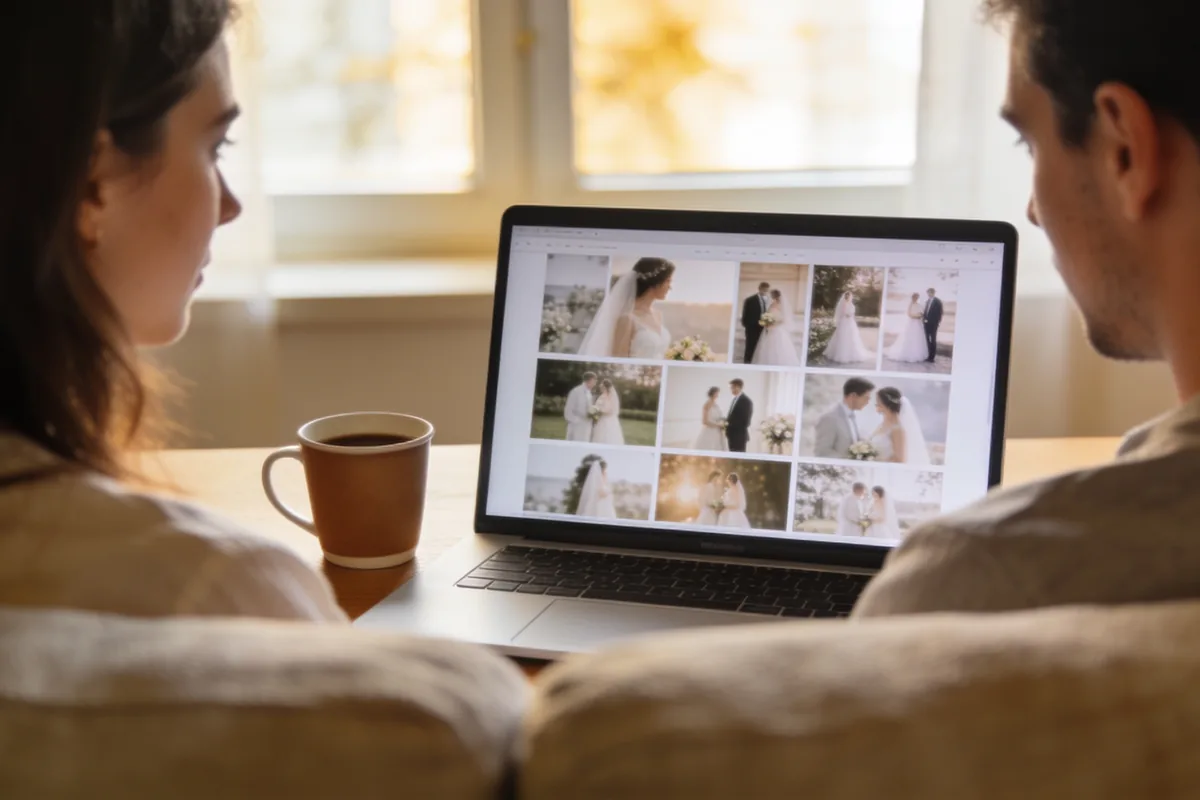
Then look at what a complete gallery reveals. Three things are worth checking in every full gallery you are shown.
- How the photographer handles the parts of the day that are not photogenic: the ceremony at noon in harsh light, the dark reception room, the child who runs through a shot. A full gallery shows whether the quality holds when the conditions are ordinary, and that is where consistency shows.
- Whether the candid moments feel real. A posed portrait can be directed until it is right. A candid frame cannot be repeated, and a full gallery shows whether the photographer had the eye to catch the in-between moments, or whether those frames are missing entirely.
- How people look unposed. Most of us are not models, and a photographer who makes ordinary people look like themselves at their best is worth more than one who only shines with camera-ready couples.
A useful habit is to ask for the same three things from every photographer you are serious about: a full gallery from a wedding in a setting like yours, a full gallery from a season or light you are likely to have, and a straight answer on how many images that couple received. Compare the answers on the same basis, the way you would compare any three quotes for the same job.
If a photographer hesitates to share a complete gallery, treat that as an answer in itself. The work that cannot be shown end to end is usually the work that would not help a couple decide.
The person, not just the portfolio
Here is the part that the highlight reel cannot show you, and the reason this decision is not only about the photos. You will spend more waking hours with your photographer on your wedding day than you will with most of your guests. You will be tired, emotional and pulled in ten directions. You will need someone who does not add to the noise.
A short video call or a coffee tells you more than an Instagram grid ever will. Do they listen when you describe the day you are planning, or do they steer everything back to their own work? Do they explain how they actually work on the day, where they position themselves, how they handle a shy couple or a chaotic reception? Do they feel like someone you would want beside you when it is emotional?
Couples who have been through it describe wanting someone who does not make it feel stiff, who captures the in-between moments without turning the day into a photoshoot. That is not a luxury. It is what lets the photographer get the real moments at all. A photographer who makes you feel awkward will get posed frames of awkward people. A photographer who makes you feel at ease will be in the right place at the right moment, because you will have forgotten to perform for them.
There is a practical test hidden in here. Notice how the photographer talks about the unglamorous parts of the job. The photographer who answers questions about a rainy day, a delayed schedule or a difficult family member with calm, specific answers is showing you how they handle pressure. The photographer who only wants to talk about the beautiful frames is showing you something else.
What is actually in the package
Wedding photography is sold in packages, and packages differ in what they include far more than in their headline prices. Two photographers can quote similar amounts for what turn out to be very different jobs. The way to compare them fairly is to put every quote on the same list of inclusions and see what each one actually promises.
| What the package should name | What often costs extra |
|---|---|
| Hours of coverage on the day | Travel fees for a regional wedding |
| Whether a second shooter is included, and whether that person is named or an associate | A second shooter, where it is not already included |
| The number of edited images you receive | Extra edited images beyond the promised number |
| A preview gallery, and the full gallery turnaround in writing | Rush delivery |
| Print or album credit | Prints and albums themselves |
| Who the photographer is on the day | An engagement shoot, where it is not bundled |
The question about who is on the day matters more than most couples realise. Some photography businesses send a different shooter from the one you met and loved. That is not always a problem, but it should never be a surprise, so ask directly who will hold the camera at your wedding, and ask to see a full gallery from that specific person, not from the business. Ask too about backup equipment and public liability insurance, because a professional who photographs weddings for a living carries both and expects the question.
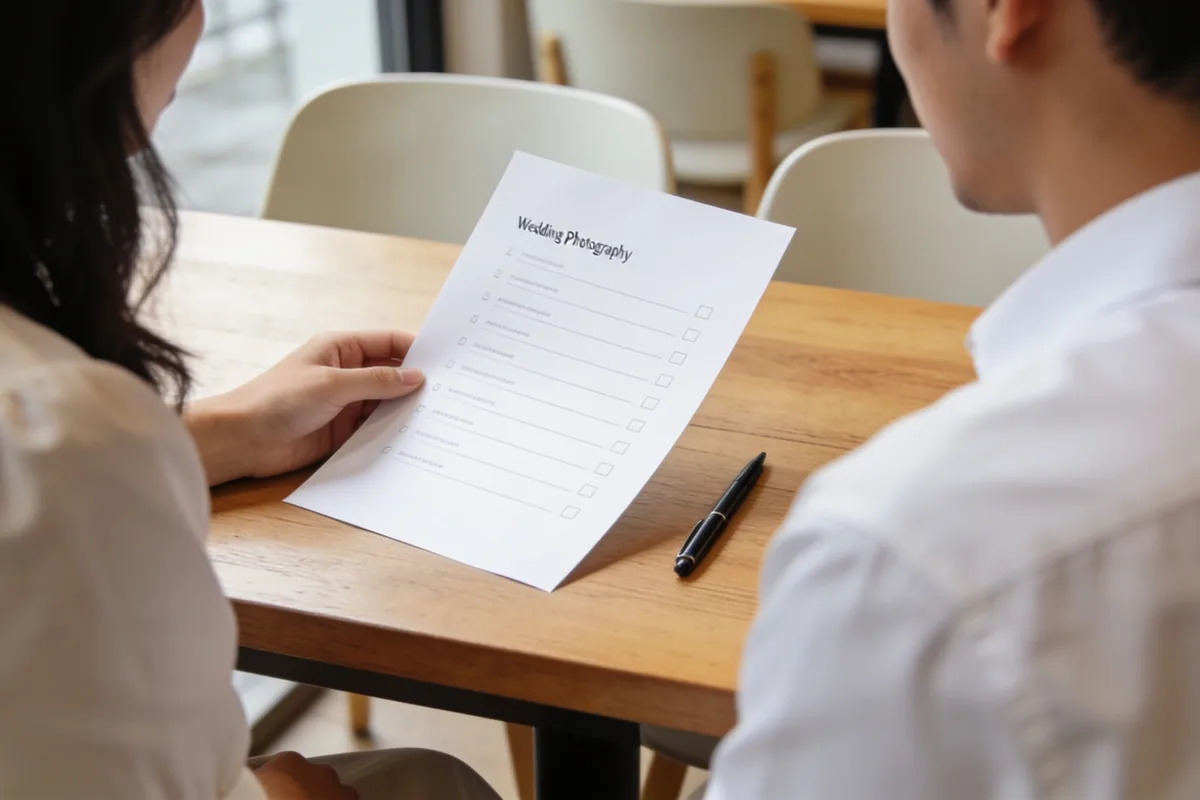
The decision rule is to compare photographers on the same list, not on a headline price. A quote that includes a named second shooter, eight hours of coverage and a ten week turnaround is a different product from a quote at the same price with none of those things named. Write the inclusions down for each photographer, side by side, and let the differences show themselves.
The contract and the booking reality
Good wedding photographers book out months ahead, especially in spring and autumn, so a couple who has found the right fit should not wait indefinitely to decide. But booking is a contract, and the contract deserves the same attention as the portfolio.
Ask to see the terms before you pay anything. The points below are the ones worth having in writing.
- The deposit, and whether it is refundable
- The cancellation policy, on both sides
- What happens if the photographer is ill on the day, and whether a backup photographer clause is in the contract
- The delivery promise, for both the preview gallery and the finished images
A photographer who has done this for years will have clear answers to all of these, in writing, without hesitation.
Two further details are worth raising before you sign. Ask what happens if the day runs long and you want coverage of the last hour, because overtime is usually charged and it is better to know the rate beforehand. And ask how you receive the images, because the difference between a download link, a USB and an online gallery matters for how you store and share the photos for the next forty years.
The honest framing is gentle but firm. A photographer who resists putting the arrangements in writing is answering your question, even if the photos are beautiful. The right photographer will be happy to write it all down, because careful couples ask every week.
Build the local shortlist
By this point the decision has narrowed itself. You know the style you want, you have looked at full galleries, and you have a sense of the person you would be comfortable with. The last step is to build a shortlist of two or three local photographers and compare them on the same inclusions, the way the previous section described.
Start local, because a wedding photographer needs to know the area, the venues and the light, and because a local photographer is easier to meet, easier to brief and easier to reach in the weeks before the day. Local wedding photographers and wedding service businesses are listed in a local business directory, which is a practical place to build that shortlist of nearby names before you start calling.
When you first write to a photographer, keep it short. Your date, your venue and the style you keep coming back to are enough, and a photographer who replies with full galleries and a sensible question has already started the conversation well.
Then run the same process for each name on the list. Ask each for a full gallery from a wedding like yours, ask for a short call or a coffee, and compare their answers on the same list of inclusions. Trust the fit as much as the folio. A couple that loves the work but feels uneasy with the person is not making a safe choice; a couple that likes both has found the one.
The person behind the camera is in every photo
Years from now, you will not remember the camera settings or the timeline. You will not remember how many edited images were in the package or which shot was the most expensive. You will remember how the day felt, and the photos will carry that feeling for decades. The person behind the camera is in every one of those frames, because they decided where to stand, what to notice and what to keep.
So choose someone whose work you love and whose company you will enjoy. The work gets you to the shortlist. The company is what makes the day comfortable enough that the real moments happen at all. Choose well on both, and the rest of the day looks after itself.
The plain action is a short one. Shortlist two or three local photographers, ask each for full galleries and a call, compare them on the same list of inclusions, and book the one you would be happy to have beside you all day. That person is going to be there for all of it. It is worth choosing carefully.
Sources: Australian Institute of Professional Photography (AIPP), what to ask a photographer · your state or territory consumer affairs body, deposits, cancellations and consumer guarantees · Easy Weddings and Australian wedding-industry vendor guides, comparing photography packages